

The Gauteng Growth and Development Agency (GGDA), in partnership with the Rosebank and Lower Rosebank Management Districts, recently hosted an investment roadshow that provided an important platform to assess and reinforce investment priorities across Gauteng’s key urban nodes. These engagements formed part of a coordinated provincial effort to consolidate investment priorities, strengthen investor alignment, and reinforce Gauteng’s position as South Africa’s primary economic and investment hub.
For Rosebank, the roadshow offered a critical opportunity to position the precinct within Gauteng’s broader investment pipeline and reinforce its role as a highly attractive, investment-ready urban node within the province’s economic geography. The precinct was recognised as a high-performing, investment-grade district characterised by established infrastructure, strong sectoral clustering, and sustained capital absorption across multiple asset classes.
This positioning affirmed Rosebank not merely as a commercial district, but as an integrated investment environment operating at the intersection of finance, real estate, services, and urban innovation – with a demonstrated ability to attract, retain, and scale capital investment.

Rosebank as a leading investment precinct in Gauteng
Rosebank has emerged as one of Gauteng’s most structurally consolidated urban nodes, supported by a diversified economic base anchored in finance, professional services, ICT, retail, hospitality, and mixed-use real estate. This sectoral composition has enabled the precinct to maintain consistent demand across both occupier and investor markets, particularly in premium-grade office space and integrated mixed-use developments.
A defining characteristic of Rosebank’s investment profile is its function as a complete urban ecosystem – integrating commercial, residential, retail, and lifestyle components within a compact and highly accessible spatial structure that reinforces long-term asset resilience. Sustained demand for well-located urban space continues to underpin capital inflows into the precinct, particularly from institutional investors and developers seeking stable, income-generating assets in established nodes.

Key drivers of investment in Rosebank
Several structural factors continue to reinforce Rosebank’s attractiveness as an investment destination.
1. Integrated mixed-use urban development
Rosebank’s built environment supports a high degree of functional integration between commercial, retail, residential, and hospitality uses, enhancing land value efficiency and reducing vacancy risk across asset classes.
2. Sectoral concentration in high-value services
The precinct’s strong representation of finance, consulting, legal, ICT, and corporate services firms positions it within the most resilient segment of Gauteng’s urban economy – sectors that prioritise location quality, connectivity, and infrastructure reliability.
3. Transit-oriented development and accessibility
Integration into the Gautrain network and broader urban mobility infrastructure strengthens Rosebank’s role as a transit-oriented investment node, improving both labour access and business connectivity.
4.Precinct governance and institutional coordination
Proactive precinct management and stakeholder coordination contribute to a stable operating environment – an increasingly critical factor in investment decision-making that strengthens investor confidence and supports long-term planning certainty.
Key investment trends shaping Rosebank
Recent investment patterns across Gauteng and South Africa align closely with Rosebank’s structural characteristics. Urban real estate remains a dominant destination for capital, particularly in nodes with strong governance, infrastructure depth, and mixed-use intensity – reflecting a broader investor preference for resilient urban assets capable of generating stable, long-term returns.
Continued growth in the services economy – particularly finance, ICT, and business services – reinforces demand for premium-grade office environments in well-connected urban districts. Digital infrastructure expansion is also reshaping urban investment dynamics, with businesses increasingly prioritising locations that offer robust connectivity, data capacity, and proximity to high-value firms. Collectively, these trends reinforce Rosebank’s positioning as a structurally aligned investment node within Gauteng’s evolving urban economy.

Investment outlook: intensification and urban consolidation
Rosebank’s forward outlook is defined less by greenfield expansion and more by intensification, reinvestment, and value consolidation. Key trajectories include:
- Continued upgrade and redevelopment of premium commercial office stock
- Expansion of mixed-use and residential integration within the precinct core
- Sustained inflows into retail, hospitality, and experience-driven urban assets
- Growing demand from finance, ICT, and professional services occupiers
- Increasing alignment with digital infrastructure and smart city systems
Rather than spatial expansion, the precinct’s investment trajectory is increasingly defined by densification and optimisation of existing urban assets, positioning Rosebank as a stabilised yet evolving investment node – offering both yield stability and long-term capital appreciation potential.
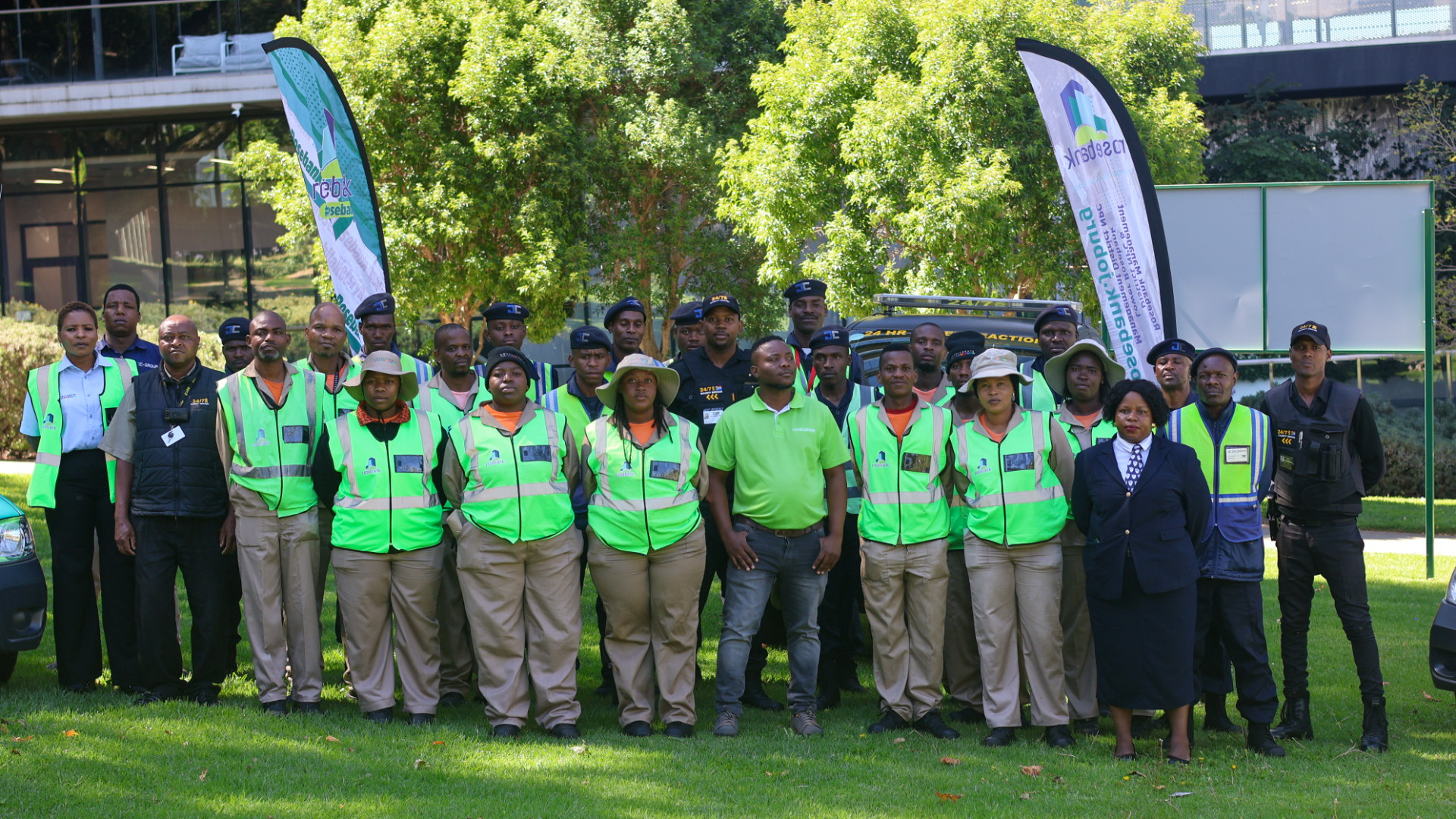
The GGDA Roadshow reinforced a clear market reality: investment is increasingly concentrating in well-governed, structurally robust, and infrastructure-enabled urban nodes. Rosebank stands out as a consolidated investment precinct characterised by strong sectoral fundamentals, sustained demand drivers, and a proven capacity to absorb and retain capital — reflecting not only historical development success but also its ongoing relevance within a shifting investment landscape increasingly defined by integration, accessibility, and urban efficiency.